Introduction to Steel Structure Products

Resilience and Intelligence: The Present and Future of Steel Structures, Seen Through Qingdao Xinguangzheng
When people talk about modern architecture, they often marvel at glass curtain walls soaring into the clouds or the magnificent domes of sports stadiums. Yet behind these spectacular images, what truly supports the backbone of our era is the resilient steel structure.
A steel structure is not simply a pile of steel. It is an engineered system formed by connecting steel plates, sections, and profiles through welding or bolting — a crystallization of industrialization. To truly grasp the allure of steel structures, the product portfolio of Qingdao Xinguangzheng Steel Structure Co., Ltd. (hereinafter referred to as "Xinguangzheng") offers an excellent lens. It reveals a complete evolutionary path from "basic skeleton" to "intelligent space."
1. Lightness and Strength: The Liberation of Spatial Structures
In traditional concrete buildings, large-span spaces often mean bulky beams and columns. But steel structures have fundamentally changed this. Walking into a sprawling logistics park or exhibition center, you will see column-free spaces supported by Xinguangzheng's pipe trusses and space frame structures.
These products concentrate loads at the nodes, leveraging the geometric principle of triangular stability to transform heavy steel into lightweight grids. This structural form, where finesse moves massive weight, allows roofs to span over a hundred meters while significantly reducing steel consumption — a perfect embodiment of steel's core advantage: high strength-to-weight ratio.
2. Speed and Integration: From Construction to "Intelligent Manufacturing"
If spatial structures demonstrate the fusion of strength and beauty, Xinguangzheng's prefabricated steel building systems represent a revolution in speed and precision. Traditional construction sites are dusty and noisy; prefabricated buildings move the majority of work into the factory.
Take Xinguangzheng's container houses and modular integrated houses as examples. The steel frame, walls, doors, windows, and even interior finishes are all completed on the assembly line. These "building modules" are then transported to the site and rapidly assembled like building blocks — into hospitals, schools, or temporary offices. This is not just a change in construction methods; it is the practical realization of the industrial ideal of "building houses the way we build cars." Complementary products like polyurethane cold storage panels and metal exterior wall cladding ensure that these prefabricated spaces are in no way inferior to traditional buildings in terms of insulation, fire resistance, and aesthetics.
3. Resilience and Protection: Empowering Specific Scenarios
In certain specialized scenarios, the "rigidity" of steel transforms into the ultimate safeguard for life and security. The temporary steel housing and hurricane-proof mobile homes in Xinguangzheng's product range push this characteristic to the extreme.
These products are not simple shelters, but precisely calculated protective fortresses. They use high-strength, cold-formed, thin-walled steel as the skeleton, reinforced with special nodal strengthening techniques to withstand extreme wind loads. When you see a mobile home still standing upright after a hurricane, you can truly feel that a steel structure is not cold, rigid metal — it is a resilient safety barrier, full of tenacity.
4. Customization and Integration: The Intelligence of Turnkey Solutions
Modern steel structures have long surpassed the stage of merely "selling steel." Observing Xinguangzheng's business logic, you'll find its core lies in a "Steel Structure +" integration capability.
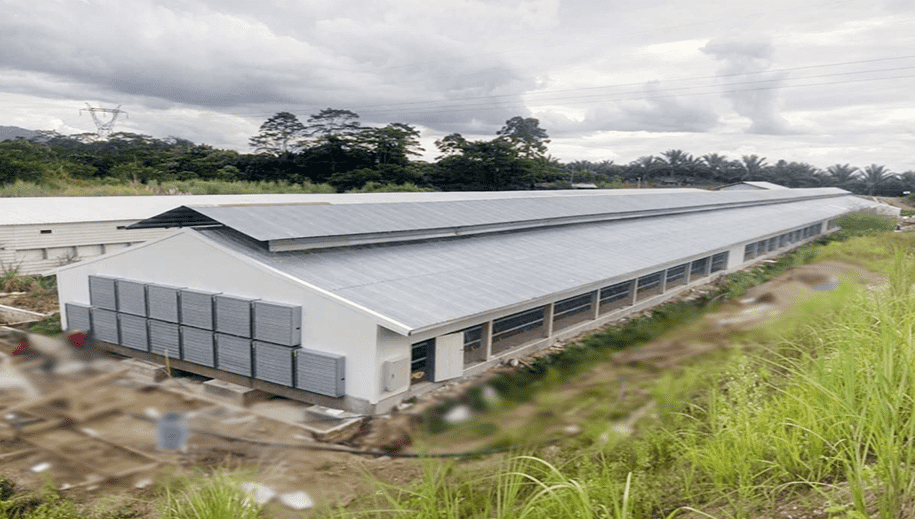
Whether it is a specialized livestock breeding house or an intelligent greenhouse, these are no longer just steel frameworks. The company deeply integrates the steel skeleton with intelligent environmental control systems, monitoring equipment, and ventilation and insulation systems, delivering complete turnkey projects for the agricultural and livestock sectors. From this, we can see that the future of steel structures is an intelligent space complex — a system built around a steel skeleton and fused with environmental control, energy management, and smart sensing.
From the industrial aesthetic of the Eiffel Tower that amazed the world over a century ago, to the efficient, assembly-line modular homes produced today by companies like Qingdao Xinguangzheng, steel structures are constantly evolving. They can be the towering factory buildings that underpin industrial civilization, or the rapidly deployable homes shipped overseas to provide warmth to disaster-stricken areas.
Whether it is the precision welding of pipe trusses, the meticulous integration of container houses, or the energy-saving closed-cell technology of cold storage panels, they all testify to the same truth: steel structures have long been woven into the fabric of our lives. In their most resilient form and with their lightest posture, they are constructing the most rational spatial relationship between humanity and nature.
XGZ Introduction to Steel Structure Products
XGZ Introduction to Steel Structure Products
Related Article